💪 High Protein
🌱 Vegan
🥕 Vegetarian
🍬 Sugar-Free
🧬 Non-GMO

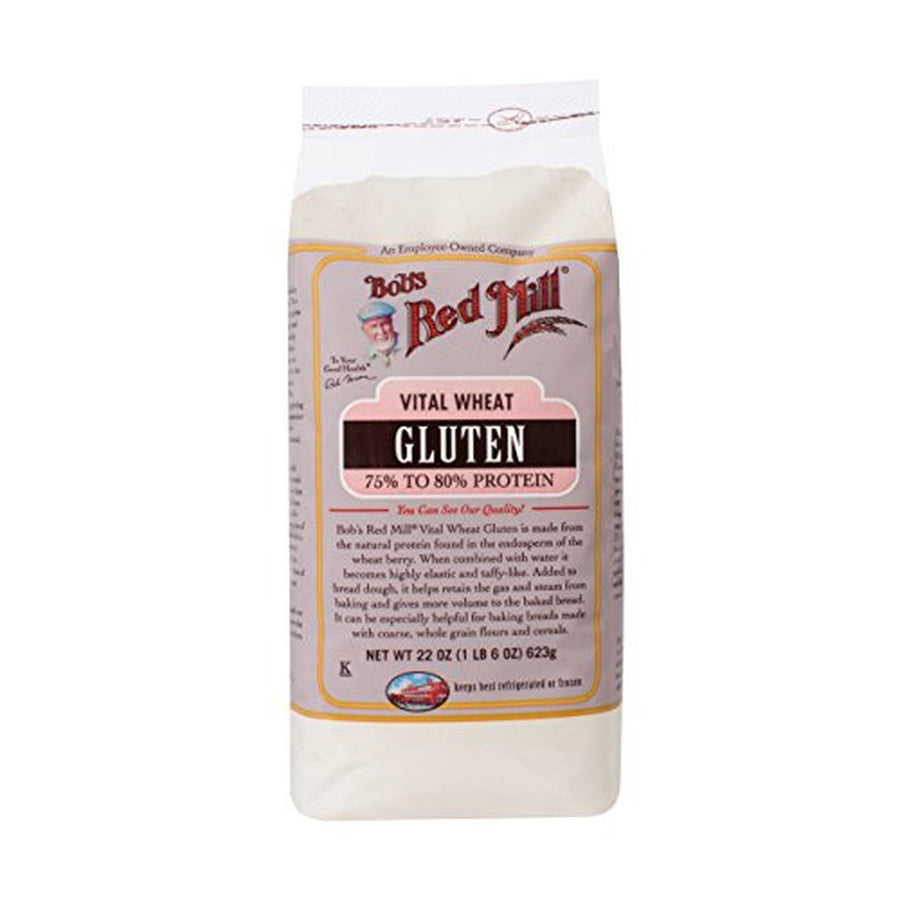
Bob's Red Mill Vital Wheat Gluten Flour, 22 oz

$20.96

🚚 Free Shipping on All Orders✅ In Stock & Ready to Ship🔒 Secure Checkout
Product Details

Ask a baker what makes dough stretch instead of tear and the answer is gluten. This is that, isolated from wheat flour and dried into a fine, pale powder. Worth saying plainly: vital wheat gluten is concentrated gluten from wheat, an ingredient for wheat baking rather than for gluten free baking.

Bakers add it when a dough needs more structure than its own flour can give. Whole grain, rye and spelt doughs, and any loaf carrying a heavy load of seeds, bran or dried fruit, tend to sit low and tight. Bob's Red Mill says only that a small amount added to yeast bread improves the texture and elasticity of the dough; the brand publishes no fixed spoons-per-cup figure, so begin modestly and adjust across a few bakes.

It is also the whole basis of seitan. Mix it with your seasonings, add water to form a stiff dough, then steam, boil or bake it until it turns chewy and meat-like.

Ingredients

Vital Wheat Gluten.

Nutrition Information
Serving size1/4 cup (30g)
Calories120
Total Fat1g (1% DV)
Saturated Fat0g (0% DV)
Trans Fat0g
Cholesterol0mg (0% DV)
Sodium20mg (1% DV)
Total Carbohydrate4g (1% DV)
Dietary Fiber0g (0% DV)
Total Sugars0g
Includes Added Sugars0g (0% DV)
Protein23g (12% DV)
Vitamin D0mcg (0% DV)
Calcium9mg (0% DV)
Iron1mg (6% DV)
Potassium24mg (0% DV)
Bob's Red Mill Vital Wheat Gluten Flour, 22 oz $20.96

Questions About This Product

The things people actually want to know before they cook with it.

How much vital wheat gluten do I add to make bread flour from all-purpose?
About 1 teaspoon per cup of all-purpose flour, swapped in for an equal amount of the flour rather than added on top of it. That raises the protein of the mix by roughly half a percentage point, which is about what it takes to move typical all-purpose flour toward the range bread flour occupies. Two teaspoons per cup pushes it further for a very strong dough. Whisk it through the dry flour before any liquid goes in so it hydrates evenly instead of forming lumps.
How do I make seitan with vital wheat gluten?
Mix the gluten with dry seasonings, then add roughly three-quarters of a cup of liquid per cup of gluten and work it into a stiff dough. Knead it briefly, let it rest 10 to 20 minutes so the gluten relaxes, then steam, bake, or simmer it below a boil until firm. A hard rolling boil makes it swell and turn spongy rather than chewy, which is the most common failure.
How much vital wheat gluten should I add to a loaf of bread?
One to two teaspoons per cup of flour is the usual working range for whole grain, rye and spelt doughs, and for loaves carrying a heavy load of seeds, bran or dried fruit. Bob's Red Mill states only that a small amount added to yeast bread improves the texture and elasticity of the dough and publishes no fixed spoons-per-cup figure, so start low and adjust across a few bakes. Past about a tablespoon per cup the crumb tightens and turns rubbery.
What is vital wheat gluten and how is it made?
It is the gluten protein of wheat, separated from the starch and dried. Flour is hydrated until the gluten develops, the dough is washed to rinse the starch away, and what remains is dried and milled into a fine pale powder. That is why it behaves like concentrated dough strength rather than like a flour, and why a small amount changes a dough so much.
What can I use instead of vital wheat gluten?
For bread, bread flour is the practical answer, since it already carries the extra protein that adding gluten to all-purpose is meant to supply. For seitan there is no substitute, because seitan is gluten; without it there is nothing to build the dough from. Recipes that swap in soy or chickpea flour make a different food rather than a replacement.
Does vital wheat gluten go bad?
As a dry powder it keeps for a long time, and the date on the bag is a quality date rather than a safety cutoff. Sealed and kept dry it stays usable well past that date; what fades first is dough strength, so an older bag may need slightly more to do the same work. Powder that has taken on moisture and gone hard or clumped should be discarded.

What Shoppers Say

Honest reviews from people who actually bought it.