🌾 Gluten-Free
🌱 Vegan
🥕 Vegetarian
🍀 Plant-Based
🥛 Dairy-Free

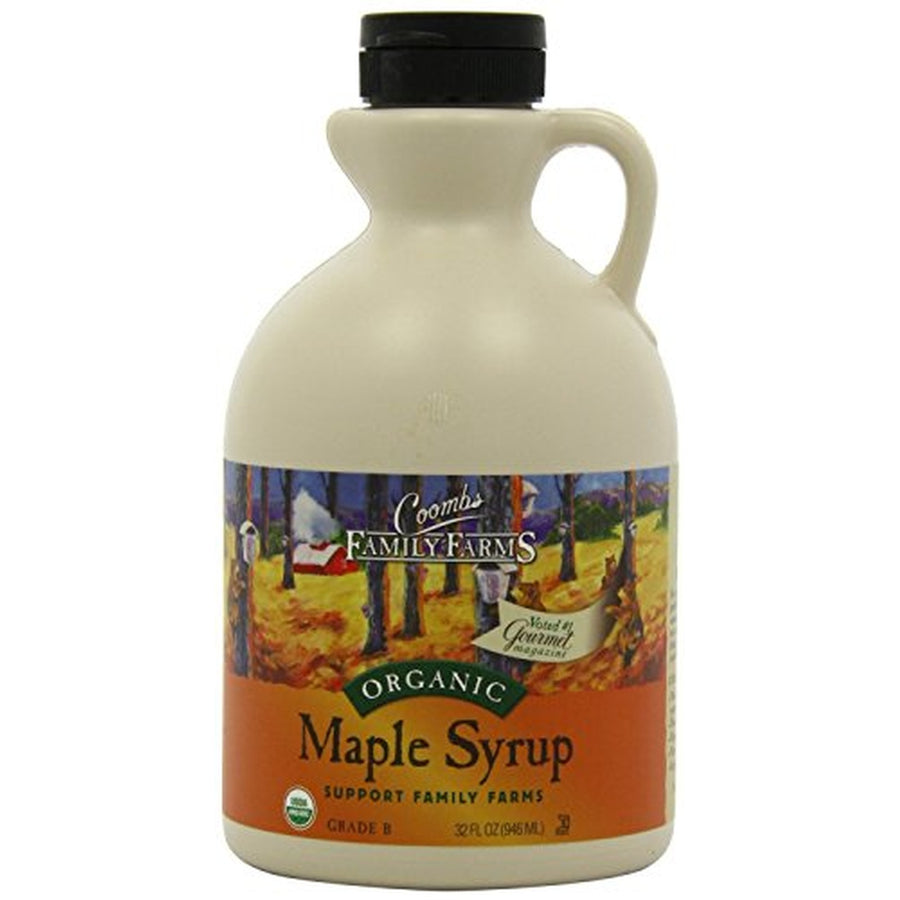
Coombs Family Farms Organic Grade A Dark Maple Syrup, 32 fl oz

$35.77

🚚 Free Shipping on All Orders🕑 Back in Stock Soon🔒 Secure Checkout
Product Details

Coombs Family Farms has been in maple for seven generations, working with family-run sugarhouses across the northern woods to bottle syrup from trees tapped in late winter. This jug is Grade A Dark Color, Robust Taste, the syrup that was labeled Grade B before the international grading rules were rewritten in the mid-2010s.

That change was about names, not about the syrup itself. All pure maple syrup now falls under Grade A, sorted by color and strength of taste: Golden, Amber, Dark and Very Dark. Dark sits toward the strong end, drawn from later runs of sap.

It holds up against heat and against big flavors, which makes it the bottle for baked beans, glazed carrots and winter squash, ham and barbecue glazes, oatmeal cookies and granola. On pancakes, waffles and yogurt it reads plainly of maple rather than of sweetness alone. Thirty-two ounces suits a house that pours it more than once a week.

Directions & Storage

Once the container is open, maple syrup should be refrigerated. Once in contact with air, mold could develop if the product is not refrigerated. Keeping your maple refrigerated also reduces evaporation.

Coombs Family Farms Organic Grade A Dark Ma... $35.77

Questions About This Product

The things people actually want to know before they cook with it.

Is Grade A Dark the same as the old Grade B maple syrup?
Yes, in practical terms. In 2015 the USDA adopted the international grading system, which retired Grade B and folded that syrup into Grade A Dark Color, Robust Taste. Coombs Family Farms describes its dark syrup as the grade formerly known as Grade B, so shoppers who used to reach for Grade B for its stronger maple flavor are looking for this jug.
Why is every maple syrup labeled Grade A now?
Under the current standard, Grade A is not a quality ranking; it covers all four table grades and the letter simply signals table-quality pure maple syrup. What actually distinguishes the bottles is the color and flavor class printed after it: Golden Color Delicate Taste, Amber Color Rich Taste, Dark Color Robust Taste, and Very Dark Strong Taste. The old system confused people because a light syrup with an A on it looked superior to a Grade B that many cooks preferred.
What is the difference between Dark Robust and Amber Rich?
They are the same product taken at different points in the season, with sap collected later in the run producing darker, more strongly flavored syrup. Coombs notes that both the color and the maple flavor in Dark are a bit stronger and more intense than in Amber Rich. Amber reads as a classic full-bodied maple; Dark tastes deeper and more caramelized and carries through other ingredients better.
Is this real maple syrup or pancake syrup?
This is pure maple syrup, which is boiled-down maple sap and nothing else. Pancake or table syrup is a different product built on corn syrup or high fructose corn syrup with maple flavoring, coloring and thickeners added. The two are not interchangeable in taste: pure maple is thinner in body and has a woody, caramel character that flavored table syrup imitates rather than reproduces.
Which maple grade is best for baking, glazing and barbecue sauce?
Dark Color Robust Taste is the one most cooks reach for when the syrup has to survive heat and compete with other ingredients. Coombs describes its dark grade as ideal for grilled, glazed or baked dishes, and it is a common choice for glazing salmon or pork, sweetening a barbecue sauce, and baking into granola or muffins. Lighter Golden syrup tends to disappear once it is cooked into something.
Will Dark Robust be too strong for pancakes or coffee?
It will taste noticeably more maple-forward than a Golden or Amber syrup, which is why many people buy it on purpose. On pancakes, waffles and oatmeal it reads as a fuller, more caramelized version of the flavor rather than a harsh one. In coffee or a cocktail you may want a slightly smaller pour than you would use with Amber, since the flavor carries further.
Where does Coombs Family Farms syrup come from?
Coombs Family Farms is based in Brattleboro, Vermont, and is run by seventh-generation maple farmer Arnold Coombs, whose family still works many of the same trees his great-great-grandparents tapped. Rather than relying on a single sugarbush, the company buys pure maple from a network of small independent family farms in the maple region. It has been working with certified organic maple since 1988.
What does the USDA Organic seal actually mean for maple syrup?
Because syrup is a one-ingredient food, organic certification is about how the woods and the sugarhouse are managed rather than about anything added to the jug. Certified maple operations follow rules on forest management, tapping practices, and the materials allowed for cleaning and defoaming, with no pesticides used in the sugarbush. Coombs has been sourcing certified organic maple since 1988 and this jug carries the USDA Organic seal.
How much sap goes into a 32 oz jug of maple syrup?
The long-standing rule of thumb in the industry is roughly 40 gallons of maple sap boiled down to make one gallon of finished syrup. That works out to somewhere in the neighborhood of ten gallons of sap for a single 32 fl oz jug. It is the main reason pure maple costs what it does compared with corn-syrup-based table syrup.
Can I use maple syrup in place of granulated sugar in a recipe?
You can, with two adjustments, since syrup brings both sweetness and liquid. A common baking substitution is about three quarters of a cup of maple syrup for each cup of sugar, with the other liquid in the recipe cut back by roughly three tablespoons. Dark Robust is the sensible grade here because its flavor still comes through after baking.
There are crystals or grit at the bottom of my jug. What is that?
Two harmless things show up in real maple syrup. Fine dark sediment is sugar sand, the natural mineral solids that precipitate out during boiling, and it settles at the bottom of the container. Hard sugar crystals form when a little water evaporates and the syrup becomes supersaturated, and they will redissolve if the jug is warmed gently in a hot water bath.
How does the 32 fl oz size compare with the smaller jugs?
Thirty-two fluid ounces is a full quart, and Coombs also packages the same organic syrup in 8 oz, 16 oz and 64 oz containers. The quart is the size most households land on if maple is a weekly item or if it is also being used for cooking and baking, since pure maple is priced by volume and the small bottles go quickly. The smaller bottles make more sense if you are trying a grade for the first time.

What Shoppers Say

Honest reviews from people who actually bought it.