
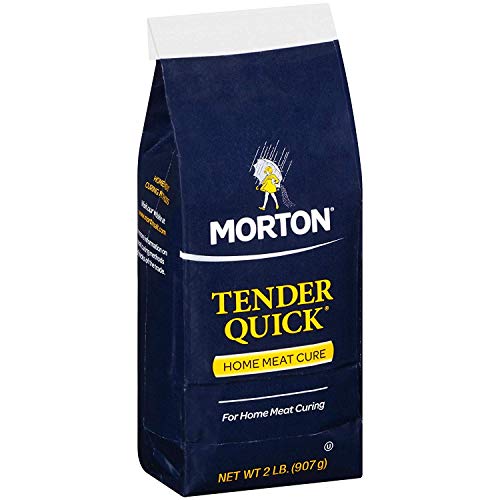
Morton Tender Quick Home Meat Cure, 2 Pack
$31.99
Product Details
Morton Tender Quick is a fast-cure mix for curing meat, poultry or game in a home kitchen. Morton sells it in a 2 lb bag; this listing is a two-pack.
Morton says it gives meats a cured flavor and the characteristic pink color, and that it works particularly well with small cuts such as pork chops, spareribs and poultry, as well as salmon, shad and sablefish. It is a curing mix rather than a meat tenderizer, and Morton does not recommend it for pork belly or bacon.
Ingredients
Directions & Storage
 Morton Tender Quick Home Meat Cure, 2 Pack
$31.99
The Complete Guide
How A Home Cure Works
Curing is salt doing three jobs at once. The salt draws water out of the meat and seasons it, the sugar softens the salt and feeds color development, and the small amount of nitrite and nitrate is what turns the meat pink, gives it the ham-like cured flavor and protects it while it sits. Tender Quick bundles all of that in one measured mix, which is why it is used by the tablespoon rather than by the pinch.
Because the cure has to travel into the meat from the outside, time depends on how thick the cut is, not how heavy it is. Two thin chops cure in an afternoon; a thick brisket takes the better part of a week.
Step By Step Dry Cure
- Weigh the meat. A kitchen scale is not optional. The rate in Morton's directions is per pound, and guessing is how cures go wrong.
- Measure the mix. Level measuring spoons, no heaping.
- Rub it in. Work the mix over every surface, including the ends and any pockets near the bone.
- Seal and refrigerate. Put the meat in a zip bag or a covered glass or plastic container. Never metal. Set it on a tray to catch any leaks.
- Turn it daily. For cures longer than a day, flip the bag once a day so the brine that forms coats the meat evenly.
- Rinse. When the time is up, rinse the surface under cold water and pat it dry. For a milder result, soak it in fresh cold water for 30 minutes to an hour first.
- Cook it through. Cured meat still needs to be cooked, smoked or simmered to a safe internal temperature before eating.
Equipment And Storage
- A digital kitchen scale, measuring spoons, heavy zip bags and a rimmed tray
- A refrigerator thermometer, so you know the meat is holding in the cold range Morton specifies
- Keep the bag of mix sealed and dry. It clumps if it draws moisture, and it will keep for years unopened.
- Store it away from the table salt and label the container. It looks like plain salt and must never be used as one.
Who It's For
- Home cooks making their own corned beef, cured pork chops or jerky for the first time
- Hunters and anglers curing game birds, venison or salmon in small batches
- Anyone who wants a single pre-measured cure rather than weighing out separate salt, sugar and nitrite
- The two-pack suits households that cure a few times a year and want a spare bag on the shelf
Recipes to Make
Home-Cured Pork Chops
- 4 bone-in pork chops, 3/4 inch thick, about 2 lb total
- 2 tbsp Morton Tender Quick, 1 tbsp per pound
- 1 tbsp brown sugar
- 1 tsp black pepper
- 1 tbsp vegetable oil
- Weigh the chops and measure the Tender Quick at 1 tablespoon per pound. Mix it with the brown sugar and pepper.
- Rub the mix over both sides of each chop. Seal them in a zip bag and refrigerate 1 to 2 hours, no longer.
- Rinse the chops under cold water, soak 30 minutes in fresh cold water for a milder cure, then pat dry.
- Heat the oil in a heavy skillet over medium-high heat. Cook the chops 5 to 6 minutes per side, until browned and cooked through to 145 F.
- Rest 3 minutes before serving.
Questions About This Product
The things people actually want to know before they cook with it.
How much Tender Quick do I use per pound of meat?
Is Tender Quick the same as pink curing salt or Prague Powder number 1?
Can I use Tender Quick to make bacon?
How long does the meat need to cure?
How much Tender Quick do I use for jerky?
Is Tender Quick a meat tenderizer?
Can I use ordinary salt, sea salt or kosher salt instead?
Can I make corned beef with it?
What happens if I use too much?
What Shoppers Say
Honest reviews from people who actually bought it.